
See Unsee summary
Season 2 of Wednesday on Netflix arrives like a sequel that mistakes “more” for “better.” The craft is still there, the gothic lacquer gleams, and the cast remains game. But where Season 1 felt like a tight, spiky mystery, this new run splinters into sidequests and loses sight of its main character’s bite.
The sprawl: story and character drift
Season 1 kept us locked on Wednesday and her investigation at Nevermore, simple core, sharp edges. Season 2 opens the map and floods it with markers. Subplots bloom around Pugsley, Morticia, Gomez, and the enigmatic Aunt Ophelia, each tugging the narrative away from the spine. It’s sidequest city. The result is a story that trades momentum for breadth and coherence for clutter.
More worrying is how the show sidelines its own avatar. Wednesday should be the cold star every scene orbits. Instead, her psychological development flattens as the camera lingers on secondary arcs that rarely earn the time they swallow. The trademark cynicism—those razor-edged asides and deadpan contrarian stances, gets sanded into more familiar teen hero beats, even shading toward a moral crusader posture that blunts her singularity. When your anti-heroine becomes generic, you’ve lost the compass.
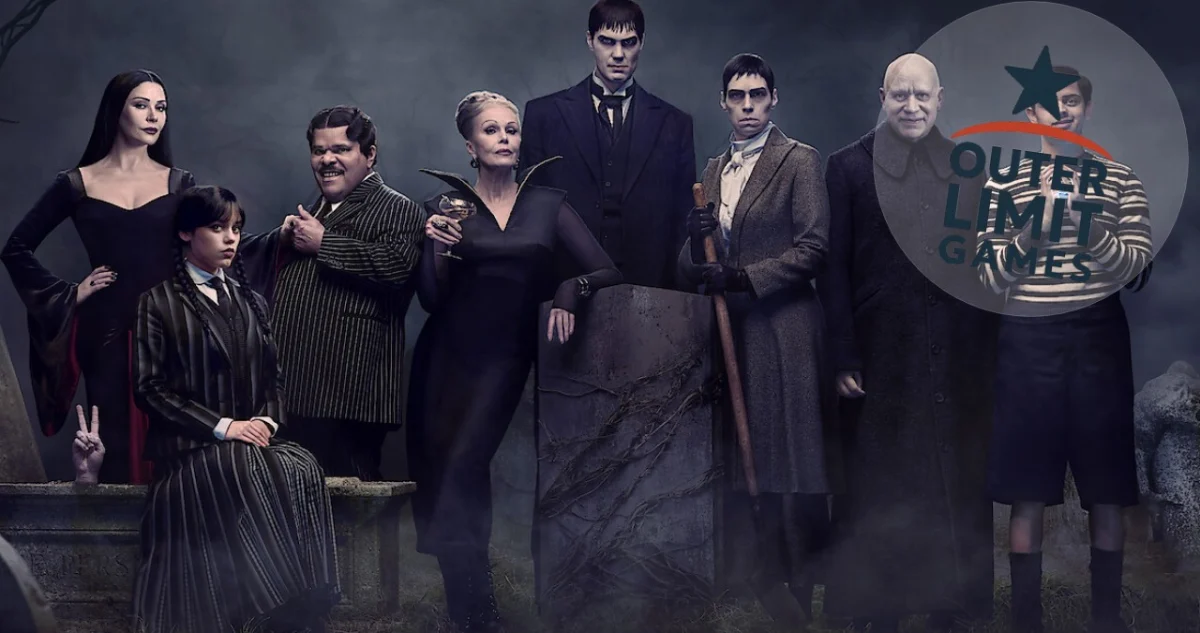
Attempts to course-correct Season 1’s thin use of the Addams clan backfire. Morticia and Gomez deserve meaty, mischievous material; here they’re grafted on in ways that feel more dutiful than dramatic. Their scenes don’t amplify Wednesday’s journey so much as encumber it. Integration without intent is just weight. To read Time-Travel RPG Starring Epic Duo Launches in 2026
Tone and pacing slump
The season leans darker—bloodier, even—with zombies and a screen palette soaked in midnight. Aesthetic commitment isn’t the problem; tone is. The black comedy, those lethal one-liners that once pricked the skin, recede. What’s left is a near-straight horror vein that doesn’t always play well with the teen-drama and supernatural-satire strands. The show keeps juggling tonal balls but drops the laugh.
Pacing takes a hit too. Several episodes drag, most noticeably during the Willowhill asylum stretch, where the show lingers on scenes that don’t escalate plot or theme. It’s Metroidvania backtracking without the dopamine. The rhythm stutters between important sequences and filler, killing urgency. Meanwhile, crowd favorites like Enid drift to the margins, which kneecaps the ensemble chemistry that gave Season 1 its fizz. You can feel the dead air.
Writing and payoff problems
The script shows seams. Some dialogue lands thudding, twists arrive without clear setup, and the chain of cause-and-effect feels, at times, arbitrarily shuffled. It reads like a room chasing shocks instead of constructing them. And then comes the finale: a cliffhanger tethered to Aunt Ophelia that opts for tease over resolution. Rather than a Nintendo Direct “one more thing” jolt, it’s more of a you-had-to-be-there shrug, a placeholder for a payoff deferred. Cliffhangers can be great; this one doesn’t cash in on what the season itself invests.
What would get Wednesday back on track
This isn’t a disaster. The production design is still a feast, the staging often cinematic, and Jenna Ortega retains the presence to command a frame. But the show veers from the blend that made it pop: mordant humor braided with a focused mystery and a heroine who refuses the easy emotional road.
Season 3 could fix a lot with a few clean edits to philosophy: To read Why NBC Ended Superstore After 6 Seasons and 113 Episodes
- Recentre the narrative on a single, crystalline mystery that puts Wednesday’s intellect and outsider edge back in charge.
- Restore the black-comic pulse—cruelly funny, economically written, mean in the right ways.
- Give secondary characters purpose-built arcs that intersect the main quest, not orbit it.
- Integrate the Addams family only when it sharpens theme or accelerates plot.
- Tighten pacing. Fewer wheel-spins, more decisive turns. If a scene doesn’t push the story, cut it.
- Choose a tonal lane and own it: horror with wit, not horror that mutes it.
- Lock internal logic. Twists should feel inevitable in hindsight, not arbitrary in the moment.
In short, here’s the pain map fans and critics keep pointing to:
- Story sprawls into scattered subplots
- Wednesday gets sidelined and softened
- Darker, gorier tone sacrifices the wit
- Addams family integration feels forced
- Finale cliffhanger under-delivers on resolution
- Languid pacing, especially around Willowhill
- Character essence drifts from her irreverent core
- Fan-favorites like Enid are underused
- Wobbly writing with clunky dialogue and odd turns
- Tonal mix stays unsettled between teen drama, fantasy, and satire
Wednesday’s second outing isn’t a failure, but it is a self-inflicted identity crisis. The show that once strutted now hesitates, trading barbs for bloat. If Season 3 ditches the map clutter and locks onto the main quest, I’ll be back with bells on. Or, more appropriately, with a deadpan stare and a perfectly sharpened quip.